Sweet Failure
Baklava, Personal Agency, and a Rational Universe

Achieving failure, after so many successful endeavors, was a victory for which I was unprepared. Month after month, year after year, I had focused my efforts on complete failure, but it was elusive and I was stuck in a rut, always triumphing. All the clappings on the back, all the mazel tovs, all the envious sidelong glances; I longed for the bitter taste of flop sweat. Sure there had been tiny setbacks. When seen under the right light maybe they could be called micro-failures, but there was never a time I could say to myself in a convincing tone “This time you really screwed the pooch.”
I see your eyes are narrowing and you won’t meet my gaze. I know what you’re thinking. Who wouldn’t be thinking that? You’re annoyed. Naturally. You think this is a humble-brag. It is not. No, it is also not the same as a movie star belly-aching about how vexing it is to be recognized everywhere. Yes, you are right. If not the same, they are certainly related. In the same family of kvetches. “Complaining that my caviar is too salty?” Please just listen to my argument. Ignore the messenger. Focus on the message. I want to convince you of my sincerity. This is one area in which I do not wish to fail.
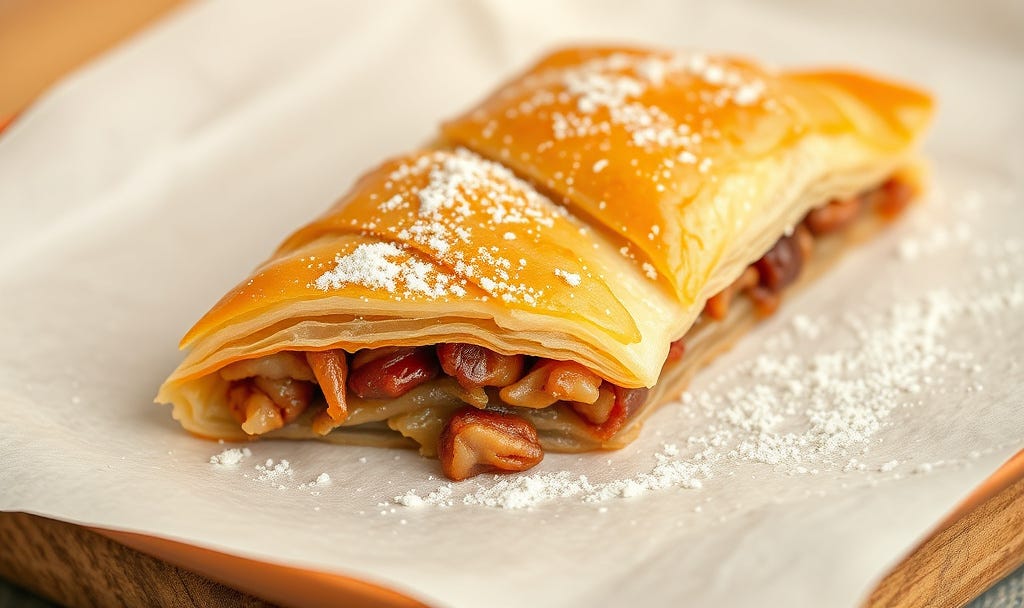
What’s your favorite food? Baklava? Good choice! Baklava is one of my favorites too. Oh, you already know where I’m going with this? Well, I need to say it anyway. What if the only food you could ever eat was baklava. Breakfast baklava. Lunch baklava. Dinner baklava, with baklava also for dessert. You would grow to hate baklava. The tedium of crispy, buttery flakes of phyllo, contrasting perfectly with ground pistachios mixed with cinnamon, the whole symphony in your mouth married by a luscious honey syrup. The boredom of it would make your tongue cry out for a carrot or even a humble turnip.
There is no joy in sameness, but even more, and also paradoxically, there is no joy in complete unpredictability. That begins to smell like chaos. This is the inheritance of the hedonic treadmill. Our desire to always strive to be richer, stronger, have more friends, more influence, more security. There is nothing so good that getting used to it, and then getting bored of it, is not a problem.
Contentment is a choice, you say? Well, my friend, that’s not exactly true is it? Recall the last time you stubbed a toe badly. Stubbing a toe is even more painful, at least for a few minutes, than breaking a finger in a fistfight. It’s due to the speed of nerve conduction. There is a brief moment after stubbing your toe in which you feel only the reverberation of your leg as it is suddenly stopped by a stair riser, before the pain signal has time to traverse the nerve from the offended toe to the toe’s sensory map in the somatic cortex. During that tenth of a second you are already consciously aware of the throbbing ache from which you will momentarily suffer. Can you choose to ignore the biochemistry of pain fiber signal propagation? You can? Well, take a more extreme example. Let’s say you were mowing the lawn in your flip-flops and you were distracted, perhaps thinking about the piece of baklava that you were saving for dessert tonight…
What I’m saying is, you have only as much free will as your nervous system will allow, and that free will is constrained by the demands of survival. No, this is not a digression. I am trying to make a rhetorical framework in order to, hopefully, persuade you, of the price of success. The rewards of failure.
I am trying to convince you that contentment is due to personal agency, be the outcome pleasant or unpleasant, or at least the belief that one has agency. To a first approximation, can we agree that we live in a deterministic cosmos? That Cause A results in Effect B? Good, we agree on that and on the deliciousness of baklava.
You might have heard our brains referred to humorously as meat computers. Our meat computers were conveyed to us, with fine-tuning along the way, from precursor ancestors going back 500 million years to Cardiodictyon catenulum, the first animal fossil with a brain. Cardiodictyon, an archaic worm, half a billion years ago, using its proto-brain, relied on predictable causes and effects in order to find lunch.
What’s my point? You really need things spelled out for you, don’t you my friend? My point is that contentment, more than anything else, relies on our belief in Cause and Effect. That nidus of consciousness is baked into life, for at least, and probably much longer, than 500 million years.
Let’s come back to my present complaint. My life has been one success after another. No matter how little I studied, I aced my college exams. No matter how much baklava I ate, my body remained trim. No matter how little effort I put into amusing women, they dated me, and no matter how little I reciprocated, friends invited me to picnics and parties. The Cardiodictyon in me writhed in confusion. My life experience does not adhere to the well-trodden, and may I say, contentment-inducing, path of Cause and Effect.
What about events on the Planck scale not necessarily conforming to Cause and Effect? I’m not trying to nerd out here, okay egghead? I’m trying to tell you about my life here in Einstein’s spacetime. In my experience, a lack of Cause and Effect is so deeply disturbing that it doesn’t matter how pillowy soft the Effects are, if the Causes were not pillowy-soft making Causes, then the pillowy soft Effects are deeply unsettling, to the point that I would prefer to sleep on gravel like Cardiodictyon did.
I would prefer to fail, and I have finally succeeded in my quest for failure.
“You say you have succeeded?” said my companion…